

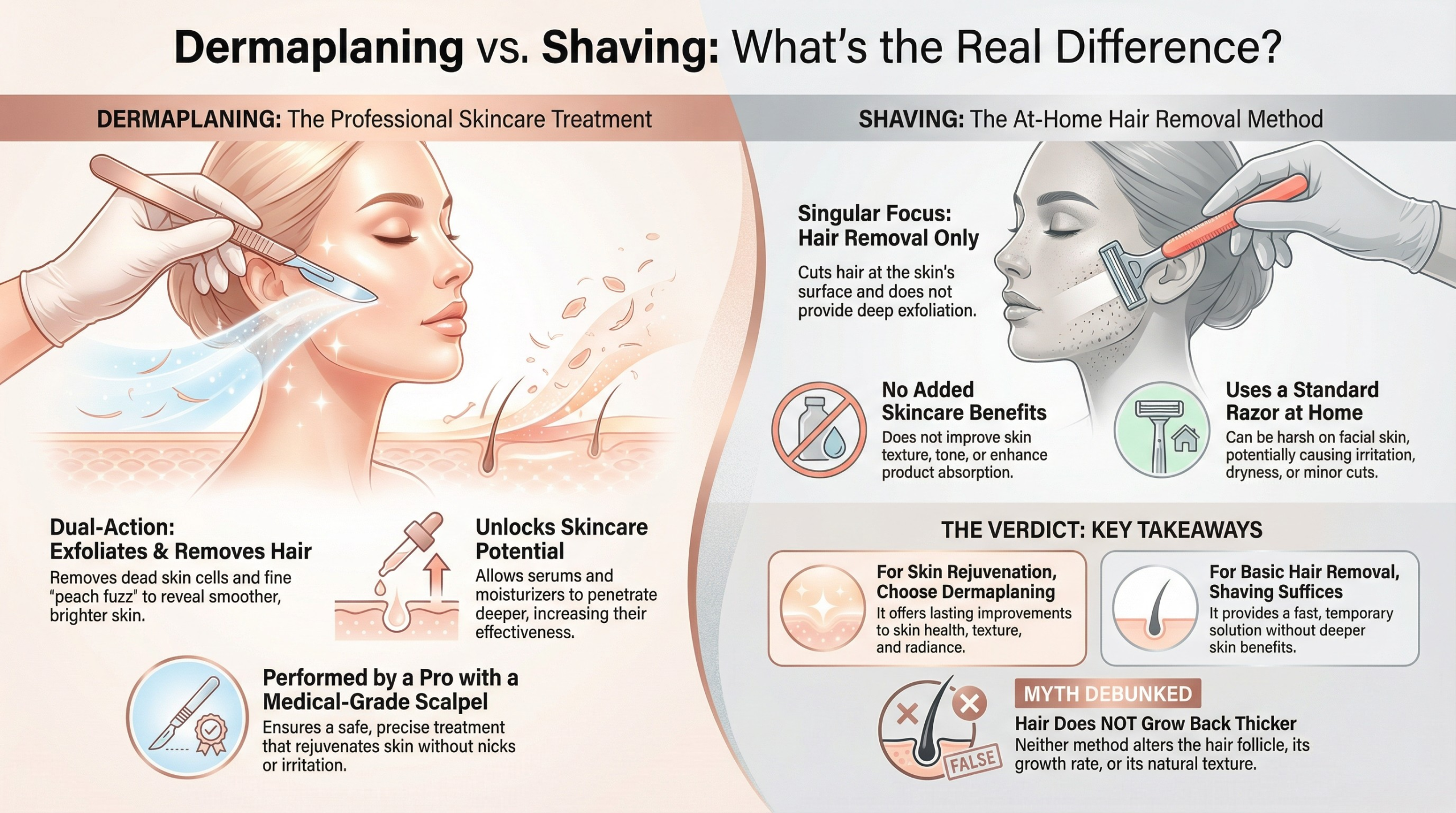
The difference between dermaplaning and shaving goes beyond just hair removal. Dermaplaning at places like Nirvana Skin Co. offers a unique blend of precision and skin renewal. It doesn’t make hair grow back darker or thicker. Instead, it leaves your skin looking younger and more radiant by exfoliating and renewing skin cells.
When you look at dermaplaning vs face shaving, dermaplaning offers more than just hair removal. It boosts your skin’s ability to soak up serums and moisturizers. This makes it a big step up from home shaving. Also, dermaplaning uses a special blade and should only be done by experts for safety and best results.
Dermaplaning gives you quick results without any downtime. It’s a better choice for lasting beauty. It doesn’t just remove hair; it rejuvenates your skin. So, for the best in facial hair removal and skin health, dermaplaning is the top choice.
Understanding Dermaplaning and Shaving: Introduction
When comparing dermaplaning vs shaving, it’s key to know their differences. Both are hair removal methods, but they use different tools and techniques. The dermaplaning process and shaving process offer unique benefits.
What is Dermaplaning?
Dermaplaning is a skincare treatment where a professional uses a scalpel to remove dead skin and fine hairs. It makes the skin smooth, youthful, and radiant. This method also helps skincare products work better by getting deeper into the skin.
Professional dermaplaning vs shaving shows dermaplaning is better for those who want to improve their skin’s health and texture.
What is Shaving?
Shaving is a common way to remove hair, done at home or by professionals. It cuts hair at the skin’s surface, giving a temporary fix. Unlike dermaplaning, shaving doesn’t exfoliate the skin but only removes hair.
This method is fast, affordable, and easy to do often. It’s great for both men and women who want to look smooth.
The Main Differences Between Dermaplaning and Shaving
When we look at dermaplaning vs shaving differences, we see they serve different purposes. Shaving mainly removes hair, while dermaplaning also exfoliates the skin. This means it gets rid of dead skin cells. This difference shows why is dermaplaning the same as shaving is a question many ask.
Dermaplaning offers more than just hair removal. It rejuvenates the skin, making it smoother and brighter. This is because it removes the top layers of skin, including fine hair. This process is done with a sterile scalpel by experts, giving a more precise result than regular razors.
Looking at shaving vs exfoliating, shaving doesn’t really improve skin texture or tone. But dermaplaning does. It makes the skin smoother and more even-toned. This is because it removes dead skin cells and fine hair.
| Feature | Dermaplaning | Shaving |
|---|---|---|
| Purpose | Exfoliates and removes fine hairs | Primarily removes hair |
| Tool Used | Medical-grade scalpel | Standard razor |
| Skin Impact | Improves texture, promotes smoother skin | Minor immediate smoothness |
| Suitability for Sensitive Skin | Generally good, with professional guidance | Varies, often causes irritation |
The table above shows the main benefits and uses of dermaplaning and shaving. Knowing these differences helps choose the right method for your skin and beauty needs.
Benefits and Advantages of Dermaplaning for Your Skin
Dermaplaning is known for its dermaplaning for exfoliation benefits. It’s a top cosmetic procedure that removes dead skin and peach fuzz. It also makes your skin better at absorbing products. The main benefits of dermaplaning include smoother, more radiant skin. This makes it a popular choice for those wanting to look younger and more vibrant.
Dermaplaning removes the top skin layer, allowing products to penetrate deeper. This makes them work better. It’s great for reducing fine lines and acne scars. Learn more about dermaplaning’s effects on your skin from medical sources. It shows how it can improve your skin in many ways.
| Attribute | Impact of Dermaplaning | Comparison to Traditional Shaving |
|---|---|---|
| Skin Texture Improvement | Enhances smoothness and glow | Minimal impact |
| Exfoliation Level | Deep exfoliation, removes dead skin cells | Only removes surface-level hair |
| Skincare Product Absorption | Increases efficacy | No significant effect |
| Frequency of Treatment | Recommended every 3-4 weeks | Varies, often daily use |
Many people have shared their positive experiences with dermaplaning. They say it’s better than shaving for looking good and feeling healthy. So, trying dermaplaning for glowing skin could be a big change for those wanting to look younger without surgery.
The Specific Tools Used in Dermaplaning vs. Shaving
When we look at dermaplaning vs shaving equipment, the tools used are key. Dermaplaning uses a medical-grade scalpel for precise exfoliation and hair removal. This tool is made to work well without harming the skin.
Traditional shaving razors are for a different job. They cut body hair close to the skin but aren’t good for facial exfoliation or removing dead skin cells.
The precision of a medical-grade scalpel is vital for skincare pros. It carefully removes dead skin, revealing a smoother, brighter complexion. For more on dermaplaning tools, check out this guide.
Standard razors can be too harsh for the face. They might cause irritation or small cuts. This can hurt the skin’s health, unlike the results from professional dermaplaning tools.
It’s clear that the tools used make a big difference. Whether you’re getting a dermaplaning treatment or shaving at home, picking the right tools is key. It helps keep your skin healthy and looks good.
Why Dermaplaning Provides a Deeper Exfoliation Than Shaving
Dermaplaning is a special way to remove hair and dead skin. It’s different from shaving because it does more than just cut hair. It also gets rid of the top layers of dead skin and fine hair, or peach fuzz.
Yes, dermaplaning does remove peach fuzz. This helps skincare products work better. It also makes the skin look brighter and feel smoother.
Some people worry that shaving can hurt their face. This is because some razors can be too harsh. Dermaplaning uses a special tool that’s safe and effective. It’s done by a professional to avoid any harm to the skin.
Table highlighting the comparative benefits of dermaplaning over traditional shaving:
| Aspect | Dermaplaning | Traditional Shaving |
|---|---|---|
| Primary Focus | Exfoliation and hair removal | Primarily hair removal |
| Tool Used | Surgical-grade scalpel | Conventional razors |
| Skin Benefits | Promotes smoother, brighter skin and deeper product penetration | May lead to irritation and superficial cuts |
| Cell Renewal | Encourages new skin cell growth | Limited impact on skin cell renewal |
Dermaplaning is better than shaving for many reasons. It offers deeper exfoliation and gentle hair removal. This makes it a top choice for those who want the best for their skin.
Professional Dermaplaning vs. At-Home Shaving: Safety and Efficacy
When looking into skin care, safety and results are key. Professional dermaplaning stands out for these qualities. It’s different from at-home dermaplaning vs professional setups because of the expertise and precision it offers. This makes a big difference in how safe and effective it is.
Is dermaplaning safe? Yes, when done by experts. Aestheticians or dermatologists with the right training make sure it’s safe and good for your skin. They use clean, top-notch tools and follow strict hygiene rules to avoid infections or bad reactions.
But, trying dermaplaning at home can be risky. You might cut yourself or use dirty tools, which can lead to infections. Also, using the wrong products can make the treatment less effective.
Choosing professional dermaplaning safety is a smart move. Salon or clinic treatments ensure your skin is well-prepared and cared for. They also give you advice on how to take care of your skin after, making sure you get the most benefits without harm.
Knowing the differences helps you make better choices for your skin. Going for professional dermaplaning means you get the best results safely and effectively.
Understanding the Myth: Does Dermaplaning and Shaving Affect Hair Growth?
Many people worry if treatments like dermaplaning and shaving change their hair growth. They think these methods make hair thicker or darker. But, experts and science say this is just a myth, giving peace of mind to those thinking about these treatments.
Experts have shown that dermaplaning and shaving don’t change hair thickness or color. Cutting hair on the skin’s surface doesn’t affect hair growth or its natural properties.
- Comparing Hair Regrowth: Studies show that shaving vs dermaplaning doesn’t change hair growth. Both just cut hair to the skin level, without affecting the follicle under the skin.
- Expert Insights: Dermatologists say hair texture, color, and growth rate stay the same after treatment. This is true for both dermaplaning and shaving.
In short, worries about does dermaplaning make hair grow back thicker are not true. These treatments are for looks and don’t change hair follicles. Knowing the real effects helps people choose skincare wisely, without worrying about hair changes.
Choosing the Right Treatment for Your Skin Type
When looking into facial treatments, knowing what your skin needs is key. This is even more important for sensitive skin. The right treatment can make a big difference.
Many with sensitive skin wonder is dermaplaning safe for sensitive skin. Dermaplaning is generally gentler than other treatments. It uses plates to remove dead skin, promoting new growth without harsh chemicals. It’s vital to get it from a skilled professional who knows how to handle sensitive skin. For more on this gentle treatment, check out this detailed guide on dermaplaning.
People also ask can I dermaplane if I have sensitive skin. It’s wise to talk to a dermatologist or aesthetician before trying it. They can do a patch test to see if it’s right for you.
Thinking about is shaving bad for your face is also common. Shaving can dry out and irritate the skin, which is bad for sensitive skin. Unlike dermaplaning, shaving doesn’t exfoliate or rejuvenate the skin as well.
If you can’t do dermaplaning, there are other options. Light chemical peels or microdermabrasion might be less intense. They can improve skin texture and health without the risks of harsh treatments.
Conclusion
Looking into facial hair removal, we see a big difference between shaving and dermaplaning. Why get dermaplaning instead of shaving reveals its many benefits. Dermaplaning does more than just remove hair; it exfoliates deeply, making your skin smoother and your skincare products work better.
Thinking about is dermaplaning worth it? Experts say yes, thanks to its many professional dermaplaning benefits. These include a brighter glow and better skin texture.
When deciding between should I shave my face or get dermaplaning, think about your skin and what you want. Dermaplaning is safe and effective, thanks to skilled professionals. It offers a deeper, lasting effect on your skin.
Getting advice from a skincare expert is key. They can help you choose the best option for your skin. Treatments at Nirvana Skin Co show the importance of expert advice for your skin’s health. Whether you prefer shaving or dermaplaning, knowing the benefits helps you make the best choice.